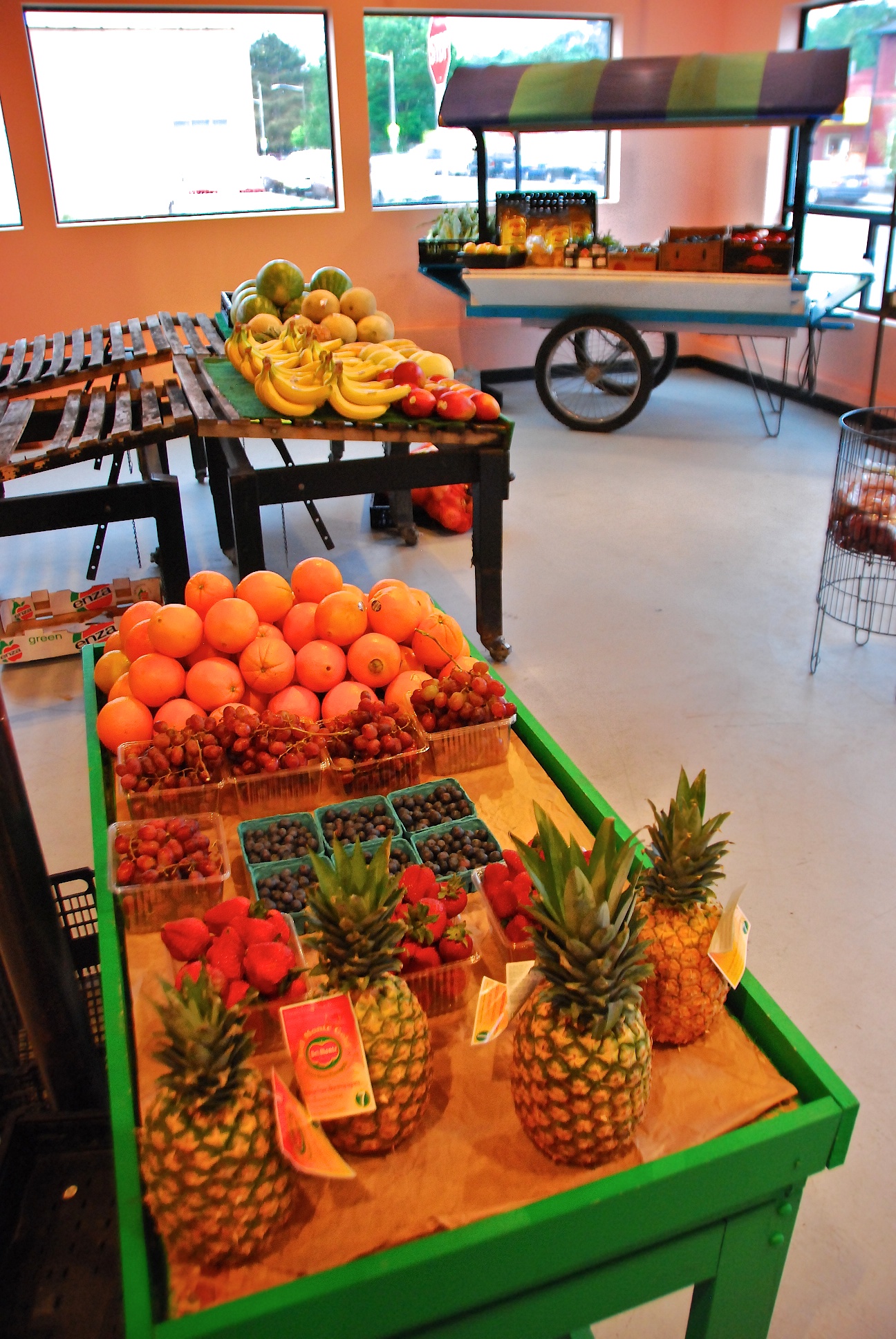
A neighborhood without a grocery store is not a neutral condition. Somebody decided it wasn't worth the investment. We disagree.
USDA Food Access Research Atlas ↗ — map every food desert in America by ZIP code.
Downtown Los Angeles · Now
Los Angeles County has over 50,000 licensed street food vendors — and some of the deepest food deserts in America. Those two facts exist on the same block. When Covid emptied DTLA office towers and WFH became permanent for hundreds of thousands of workers, downtown foot traffic collapsed by more than 50 percent. The lunch economy that had sustained independent food vendors, produce distributors, and small manufacturers across the city vanished almost overnight — and the people who lost it had no reserves to fall back on. These are not corporations. These are families with carts, prep kitchens, and supplier relationships built over decades, operating in neighborhoods where a taco truck with a loyal following can still be invisible to anyone outside a three-block radius — no map pin, no URL, no way for a new customer to find them tomorrow.
Martin's Way sees this as the same problem we faced on Delridge in 2010: a community with real food, real operators, and real demand — and a broken connection between all three. Our approach in Los Angeles:
- Pop-Up Fresh Food Stores · LA Food Deserts Leverage DTLA street food licenses and pop-up permits to bring fresh produce into neighborhoods classified as food deserts — offering residents a genuine choice between fresh food and junk food.
- Income for Independent Distributors Partner with produce and food distributors hit hardest by Covid and the collapse of the office lunch economy — connecting them to new markets, new licenses, and new customers.
- Street Food Entrepreneur Network Form partnerships with street food cart operators and small manufacturers to help independent food entrepreneurs build sustainable, visible businesses.
- Every Taco Truck on the Map Give every licensed cart, truck, and corner vendor a digital address — a URL, a map pin, a place customers can find them. Visibility is infrastructure.
Project Delridge · West Seattle · 2010–2012
Delridge Way is a street of no choices — cheap beer and cigarettes. In 2010, we opened a pilot store to bring fruit and vegetables to the Delridge community. The purpose was simple: offer the same food choices to Delridge residents that people in more affluent neighborhoods take for granted. For two years we sold the highest-quality produce, fruit, and spices at cost. We concluded the project when a local food co-op announced their store opening. That was the goal — not to run a store forever, but to prove the neighborhood deserved one.
Diane Tice made Project Delridge possible — gifts from her organic orchard, and the conviction that a nonprofit could actually do this.